



Beyond the Data: Why Visibility Matters for African Education Research
Despite significant growth in scientific production across Africa, a critical challenge persists: the visibility and subsequent utilisation of high-quality, locally relevant education research. This isn’t just about publishing papers; it’s about ensuring that vital insights reach the policymakers, funders, and teachers who can translate them into tangible impact.
At a Glance
◎ African scientific production is growing faster than any other region, yet local research often remains under-utilized.
◎ A lack of accessible platforms and structured dissemination channels limits the reach of valuable education research.
◎ Dominance of North-South collaborations and external funding agendas can sometimes overshadow locally relevant research priorities and dissemination needs.
◎ African research leaders are uniquely positioned to bridge the gap between research and practice by actively advocating for and translating findings for diverse audiences.
◎ Investing in career development, networking, and direct engagement opportunities for early-career researchers is crucial to enhance visibility and impact.
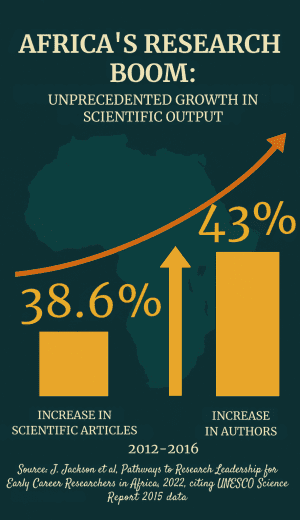
The landscape of education research in sub-Saharan Africa is vibrant and expanding. Recent analyses, like the African Education Research Database (AERD) report, reveal a rich tapestry of studies covering critical themes such as language and curriculum, teachers and teaching, equitable and inclusive education, and policy and financing. Furthermore, a study on “Pathways to Research Leadership for Early Career Researchers in Africa” notes that Africa has experienced the strongest growth in scientific output globally, with a 38.6% increase in scientific articles and a 43% increase in authors between 2012 and 2016.
Education is the key that unlocks the golden door to freedom.
-George Carver
However, this impressive growth doesn’t automatically translate into widespread awareness or utilisation. Many groundbreaking findings by African scholars remain siloed, struggling to break through to the audiences who need them most. This “visibility gap” hinders evidence-based policymaking, limits targeted funding, and ultimately slows down educational progress on the continent.
Why The Visibility Gap?
One key factor is the historical and ongoing challenge of fragmented access to African-led research. Prior to initiatives like the AERD, finding comprehensive collections of education research by scholars based in sub-Saharan Africa was difficult. This lack of a centralised, accessible repository contributes to under-utilisation, even when the research is highly relevant to local contexts.
Moreover, the “Pathways to Research Leadership” article sheds light on systemic issues that contribute to this challenge. While early career researchers are expected to increase their outputs and contribute to global rankings , they often face minimum resources and a scarcity of formal mentorship programs. Funding, often dominated by international funders, can also steer research agendas, which may not always align with the most pressing local needs or prioritise local dissemination strategies. Intra-regional collaboration, though vital for shared learning and visibility, remains below 15%, indicating a need for greater networking within Africa itself.
The Role of Research Leaders in Driving Visibility
The report emphasises that effective research leaders in Africa do more than just produce excellent research. They are expected to build linkages with science and policy leaders, advocate for science, engage with various stakeholders (including funders), and actively translate their findings beyond traditional academic publishing. This includes creating impact in communities, developing evidence-based policies, and even converting innovations into products and services. This clearly demonstrates that visibility is not a side effect, but a core responsibility of impactful research.
For early-career researchers, opportunities to build their research profile, engage with broad networks of research leaders, and participate in international collaborative teams are critical for career development and increasing the reach of their work. Yet, a significant portion (over 40%) of surveyed researchers are unaware of such programmes at their own institutions.
Actionable Insights
What This Means for Policymakers?
📚 Prioritize Accessible Research Platforms: Support and utilise databases like the African Education Research Database (AERD) to access local evidence for policy formulation. Ensure government departments have easy access and training on how to navigate these resources.
💰 Fund Research Translation: Allocate specific budgets for research dissemination activities beyond academic publications, including policy briefs, public seminars, and digital content that makes findings digestible for non-academic audiences.
🤝Foster Dialogue: Create formal and informal channels for researchers to engage directly with policymakers, ensuring that research questions are relevant to policy needs and that findings are communicated effectively.
How Funders Can Support This?
🗣️ Invest in Dissemination & Communication Training: Integrate training on effective communication, policy engagement, and media outreach into research grant requirements and capacity-building programmes for African scholars.
🌐 Promote Open Access: Encourage and fund open-access publishing models for African-led research to ensure wider availability and visibility globally and locally.
🤝 Support Intra-Regional Collaboration: Prioritise funding for projects that foster partnerships between African institutions and researchers, strengthening regional networks and shared learning.
📍 Align Agendas with Local Priorities: Ensure that funding priorities are co-created with African stakeholders to address the most pressing local educational challenges, leading to more relevant and therefore more utilised research.
What Teachers Can Do?
🔎 Seek Out Local Evidence: Actively look for research findings from African scholars and institutions that are relevant to your classroom context and teaching challenges.
👥 Engage with Research Communities: Participate in workshops, seminars, or online forums where researchers share their findings. Provide feedback on the practical implications of research.
📖 Share Best Practices: Document and share your own classroom innovations and the impact of research-informed strategies within your school or professional networks, becoming part of the dissemination chain.