


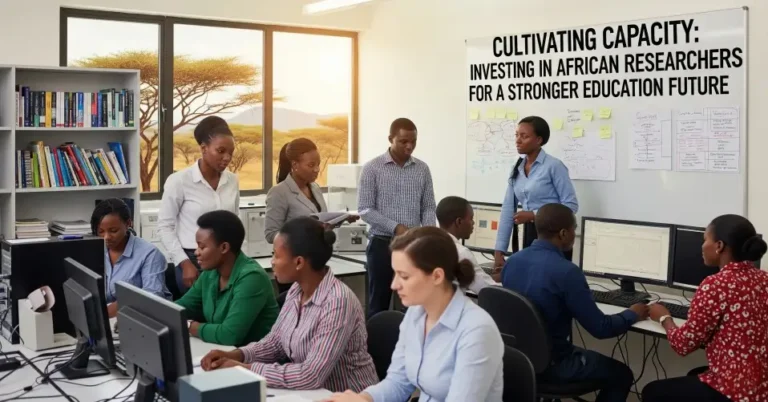
Cultivating Capacity: Investing in African Researchers for a Stronger Education Future
Africa’s educational landscape is complex and rapidly evolving, demanding robust, locally relevant research to inform effective policy and practice. While the continent’s scientific output is on an impressive upward trajectory, truly harnessing this momentum requires a deliberate and sustained investment in cultivating the capacity of African researchers themselves. This isn’t just about increasing publications; it’s about empowering scholars to drive impactful change from within.
Building capacity is more than training scholars; it is cultivating a generation of thinkers who will transform Africa’s education landscape.
-Casey Bennett
Trade and supply chain finance is no longer just about moving money—it is about enabling resilience, sustainability, and growth in an interconnected world. As technology reshapes financial flows and sustainability becomes a central priority, businesses have the chance to transform supply chains into smarter, more transparent, and future-ready ecosystems. By embracing innovation, collaboration, and responsibility, organizations can turn today’s challenges into opportunities, ensuring that global trade continues to thrive in this new age of finance.
At a Glance
◎ African scientific production has seen the strongest global growth (38.6% increase in articles, 43% in authors between 2012-2016).
◎ Despite this growth, African researchers often face scarce resources, limited access to funding, and a need for stronger intra-regional collaborations.
◎ Sustainable research capacity extends beyond publishing; it encompasses skills in grant applications, strategic dissemination, and impactful policy engagement.
◎ A significant “awareness gap” exists, with many early-career researchers unaware of existing leadership development programmes.
◎ Targeted investment from policymakers and funders, alongside proactive engagement from researchers, is crucial to build a resilient and impactful education research ecosystem in Africa.
The vibrancy of African scholarship is undeniable. The “Pathways to Research Leadership for Early Career Researchers in Africa” article highlights that the continent has experienced the strongest growth in scientific production globally, with a remarkable 38.6% increase in articles and a 43% increase in authors between 2012 and 2016. This growth is a testament to the dedication and talent within Africa’s research community.
However, beneath this impressive headline lies a nuanced reality. The same article points to persistent challenges: researchers often operate with minimum resources, much of the research is self-funded, and international funders frequently influence research agendas. While global collaborations are valuable, they predominantly lean towards North-South partnerships, with intra-regional collaboration standing at a mere 15%. This can inadvertently steer focus away from locally prioritised issues and limit the organic development of African-led research ecosystems.

Beyond Publication: The Imperative of Impact
Cultivating capacity is about more than just boosting publication numbers. It’s about equipping researchers to generate not just data, but impact. The “Pathways to Research Leadership” article underscores that effective research leaders are expected to do far more than publish. They must build linkages with policymakers, advocate for science, engage with a wide array of stakeholders, and crucially, translate their findings beyond academic journals to create community impact and evidence-based policies.
This highlights critical areas for investment in capacity development:
💡 Mastering Grant Applications: The prevalence of self-funded research underscores a significant need for training in securing diverse funding streams. African researchers require support in identifying appropriate grants, understanding complex application processes, and developing compelling proposals that articulate the local relevance and potential impact of their work.
📚 Strategic Publishing and Dissemination: Beyond the mechanics of submitting to journals, capacity building must focus on strategic publishing. This includes understanding the landscape of high-impact journals, navigating open-access models to ensure wider reach, and developing strategies for reaching non-academic audiences. It’s about making research visible and accessible, a core mission of initiatives like the African Education Research Database (AERD) itself.
🌍 Effective Research Impact Strategies: This is perhaps the most critical area. Researchers need training in:
◎ Policy Engagement: How to translate complex findings into concise, actionable policy briefs.
◎ Stakeholder Communication: Tailoring messages for various audiences – communities, practitioners, media.
◎ Advocacy: Skills to champion their findings and advocate for evidence-based change.
◎ Networking: Building robust intra-regional networks to foster collaboration, share resources, and amplify impact across the continent.
👩🏽🏫 Mentorship and Leadership Programmes: The “Pathways” article reveals that over 40% of surveyed early-career researchers were unaware of institutional programmes for research leadership development. This points to a glaring need not just for more programmes, but for better visibility and accessibility of structured mentorship, career planning, and leadership opportunities for the next generation of African scholars.
Actionable Insights
What This Means for Policymakers?
📑 Value Local Evidence: Prioritise and actively seek out research conducted by African scholars for policy formulation. Create formal channels for researchers to present findings.
🔄 Invest in Translation Mechanisms: Fund initiatives that support the translation of research into accessible policy briefs, public dialogues, and actionable recommendations.
🏛️ Create Enabling Environments: Reduce bureaucratic hurdles for researchers and foster institutional environments that recognise and reward research for impact, not just publications.
How Funders Can Support This?
⏳ Shift Towards Long-Term Capacity Building: Move beyond project-specific funding to invest in sustained, flexible programmes that build research infrastructure and human capacity within African institutions.
🌍 Support African-Led Agendas: Prioritise funding for research questions determined by African scholars based on local needs and priorities, rather than externally imposed agendas.
🎓 Fund Comprehensive Training: Specifically allocate funds for training in grant writing, research management, impact pathway planning, and diverse dissemination strategies for early and mid-career researchers.
🤝 Promote Intra-Regional Collaboration: Incentivise and fund research projects that actively foster partnerships between researchers and institutions across different African countries.
What Researchers Can Do?
📚 Proactively Seek Training: Actively look for workshops and programmes on grant writing, publishing strategies, and communication skills, both within your institution and through external networks.
🌐 Build Your Network: Engage actively in conferences, online forums, and research groups, particularly seeking out opportunities for intra-regional collaboration.
🎯 Prioritise Impact: From the outset of a research project, think about how findings can be translated for policymakers, practitioners, and communities. Develop a dissemination strategy beyond academic papers.
👩🏽🤝👨🏼 Mentor Others: Experienced researchers should actively mentor early-career scholars, sharing practical knowledge on navigating the research landscape and fostering impact.



1 Comment
Mohammad
March 04, 2026, at 9:22 pmHowdy! Do you know if they make any plugins to safeguard against hackers?
I’m kinda paranoid about losing everything I’ve worked hard on. Any suggestions?